

Creating an inviting outdoor space often starts with choosing the right patio or deck. Both patios and decks serve as versatile extensions of your home, perfect for relaxing, entertaining, or enjoying nature. However, they come in various materials, designs, and styles, each with unique benefits and aesthetics. This blog explores the main types of patios and decks to help you decide which option best suits your home and lifestyle.
Patios: Ground-Level Outdoor Living
Patios are typically built at ground level, often directly on the soil or a prepared base, and are known for their durability and low maintenance. They can be constructed from a variety of materials, each offering distinct looks and functionality.
1. Concrete Patios
Concrete is one of the most popular patio materials due to its affordability, versatility, and durability. It can be poured into virtually any shape, making it ideal for custom designs.
- Pros: Cost-effective, long-lasting, and low maintenance. Can be stained, stamped, or textured to mimic stone, brick, or tile.
- Cons: Prone to cracking in extreme weather; less natural aesthetic compared to stone or brick.
- Best For: Homeowners seeking a budget-friendly, customizable option.
2. Brick Patios
Brick patios offer a classic, timeless look with their warm, earthy tones. They’re typically laid in patterns like herringbone or basketweave for added visual appeal.
- Pros: Durable, slip-resistant, and easy to repair (individual bricks can be replaced). Adds charm and character.
- Cons: Higher cost than concrete; can be uneven if not installed properly.
- Best For: Traditional or rustic home designs.
3. Paver Patios
Paver patios use interlocking stone, concrete, or brick pavers to create a polished, sophisticated surface. They come in various colors, shapes, and textures.
- Pros: Highly customizable, durable, and easy to replace individual pavers. Permeable pavers allow water drainage, reducing runoff.
- Cons: Initial installation can be expensive; requires occasional maintenance to prevent weeds between pavers.
- Best For: Modern or upscale outdoor spaces.
4. Flagstone Patios
Flagstone patios use flat, natural stone slabs (like sandstone or limestone) for a rugged, organic look. Stones are often laid with grout or ground cover like moss.
- Pros: Natural beauty, slip-resistant, and durable. Each stone is unique, creating a one-of-a-kind patio.
- Cons: Expensive due to material and labor costs; uneven surfaces may not suit all furniture.
- Best For: Nature-inspired or high-end landscapes.
5. Gravel or Loose-Material Patios
Gravel, crushed stone, or pea gravel patios are budget-friendly and easy to install. They create a casual, permeable surface.
- Pros: Affordable, easy to install, and excellent for drainage. Can be paired with stepping stones for stability.
- Cons: Requires regular maintenance to keep gravel even; not ideal for heavy furniture.
- Best For: Informal, low-budget outdoor areas.
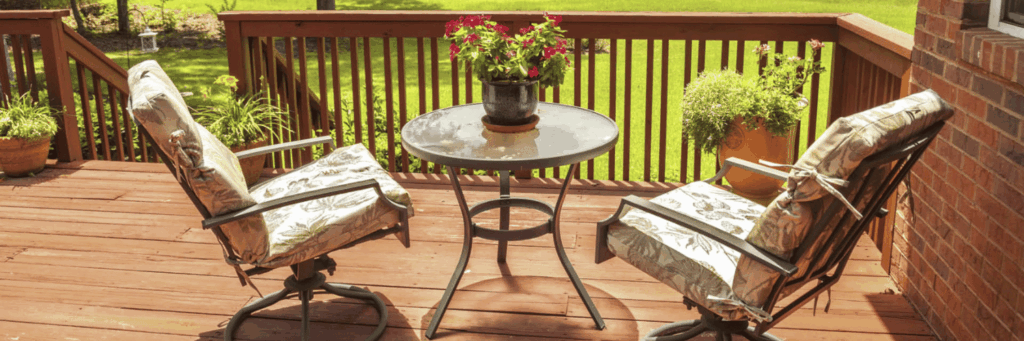
Decks: Elevated Outdoor Platforms
Decks are typically elevated structures, often built with wood or wood-like materials, and attached to the house. They’re ideal for uneven terrain or creating a raised outdoor space.
1. Wood Decks
Wood decks, commonly made from cedar, redwood, or pressure-treated pine, offer a warm, natural aesthetic.
- Pros: Classic look, relatively affordable (especially pressure-treated wood), and easy to customize with stains or paint.
- Cons: Requires regular maintenance (sealing, staining) to prevent weathering, rot, or insect damage.
- Best For: Traditional homes or those who love a natural wood look.
2. Composite Decks
Composite decks are made from a blend of wood fibers and recycled plastic, designed to mimic wood while requiring less upkeep.
- Pros: Low maintenance, resistant to rot
- Cons: Higher Initial Cost; more expensive upfront than traditional wood
- Best For: Homeowners seeking a durable, low-maintenance alternative to traditional wood decking